Visit to Historical Artsakh
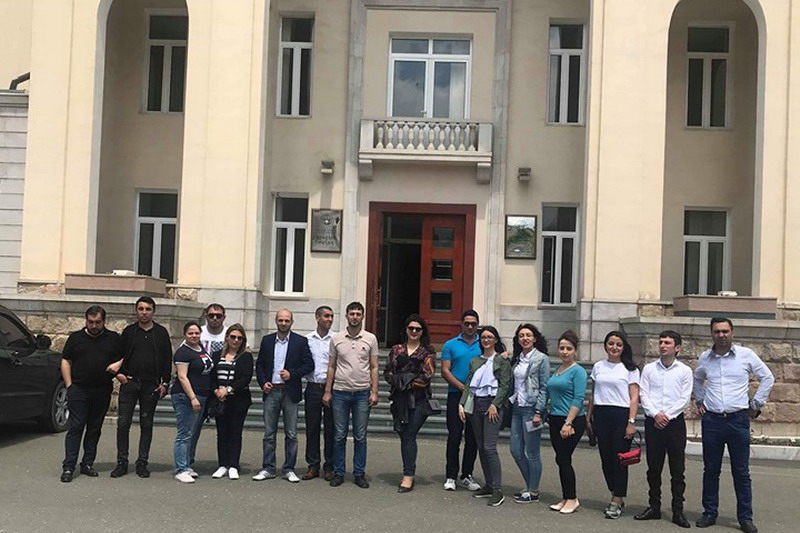
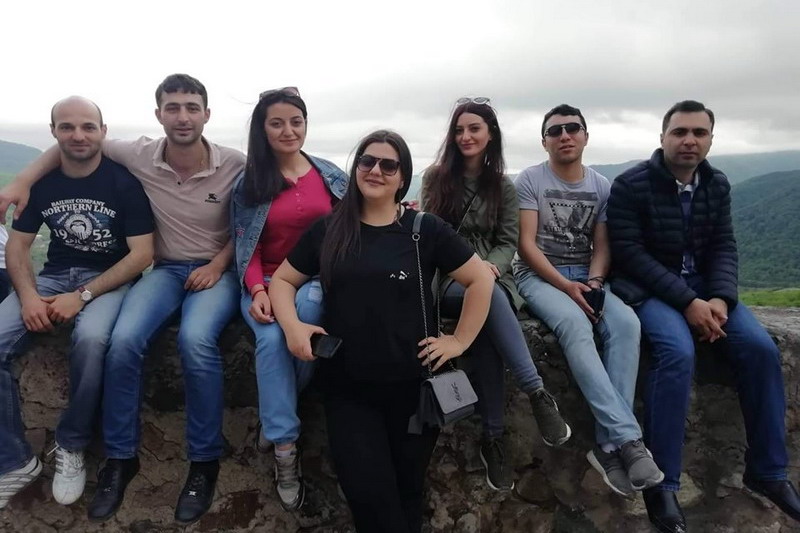
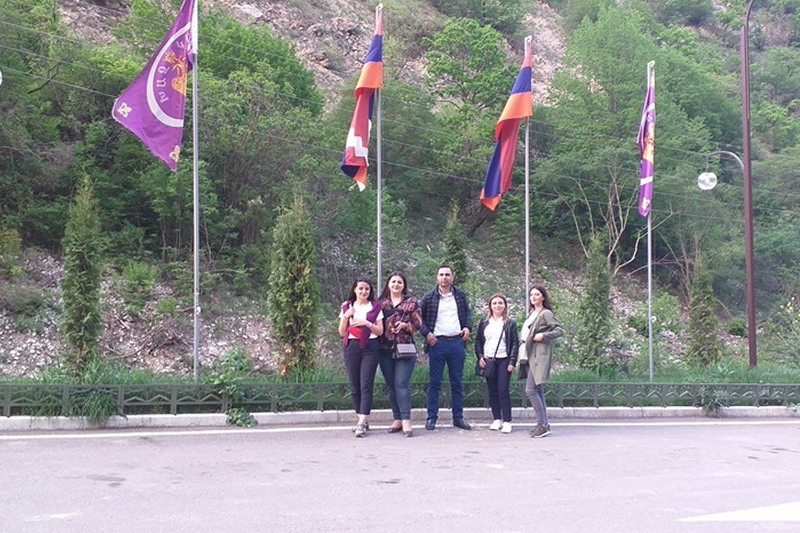
On May 11–12, 2019, the Public Relations Department and the Student Council of ISEC NAS RA organized a special visit to historical Artsakh in celebration of the May holidays, specifically for the Center’s Master’s students.
On the first day, we traveled to Artsakh via the Vardenis–Martakert road, which passes through the Karvachar region. Our first stop was the Dadivank Monastic Complex in the Shahumyan district of the Republic of Artsakh. Constructed between the 4th and 17th centuries, the complex is named after Saint Dadi, a disciple of Apostle Thaddeus, one of Christ’s 70 disciples. In the 1st century, Dadi was stoned to death and buried; after the adoption of Christianity in the 4th century, his tomb became a pilgrimage site, from which the monastic complex emerged. The abbot of Dadivank, Father Hovhannes Kahana Hovhannisyan, blessed the visitors, after which we continued our journey.
The next stop was the village of Haterk in Martakert, where the second festival of Jengyalov Hach—symbolizing Artsakh cuisine—was held. Hundreds of participants attended from Yerevan, nearby villages, and even several foreign guests. Each pavilion prepared the bread according to its own recipe and served it with yogurt drink (tan) and wine. In the pavilion from Hadrut, the largest Jengyalov Hach to date was baked, measuring 2.83 meters in length and weighing 20.885 kg, recorded in the Armenian Book of Records. The festival was accompanied by national songs and dances, adding to the festive atmosphere.
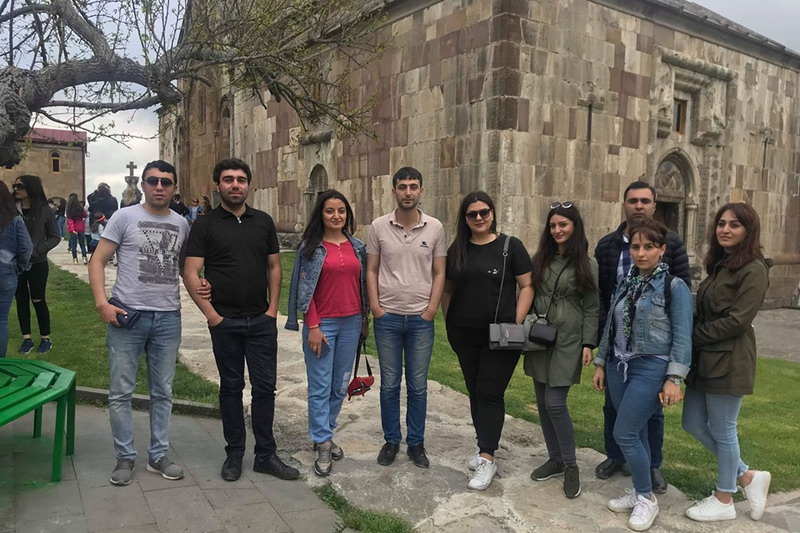
After tasting the bread, we proceeded to the Gandzasar Monastic Complex. The Church and narthex of St. John the Baptist are located on a high hill along the Khachen river and were built between 1216–1238 by the Jalalyan princes. Around 200 inscriptions adorn the buildings, many of which are examples of medieval art.
After exploring the monastery’s history, we visited the Matenadaran-Gandzasar Scientific and Cultural Center named after M. Mashtots, where we examined manuscripts, ancient books, archival documents related to Artsakh’s history, as well as manuscripts brought or saved from other monasteries and churches.
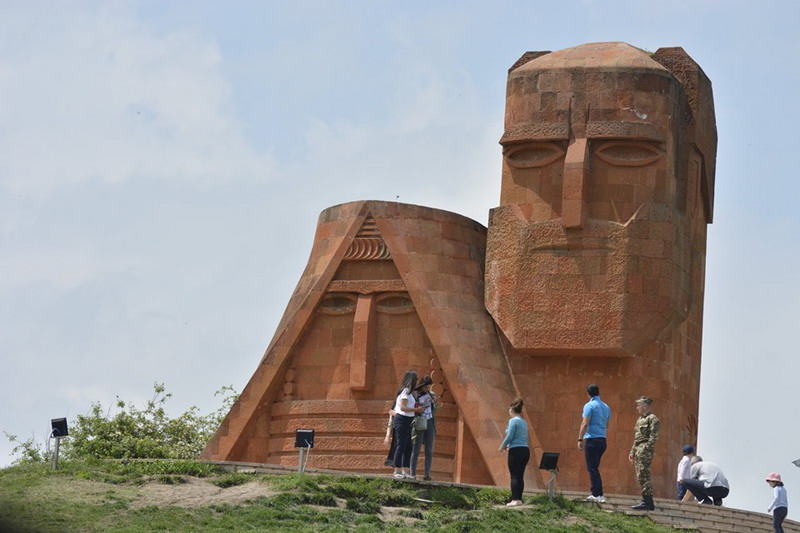
The Lion Rock monument (built in 2007 by artist-sculptor Aram Avagyan) on the Gandzasar grounds was also impressive. In the evening, we arrived in Stepanakert, where we were greeted by the city’s famous monument “Grandfather and Grandmother” (“We Are Our Mountains,” sculptor Sargis Baghdasaryan).
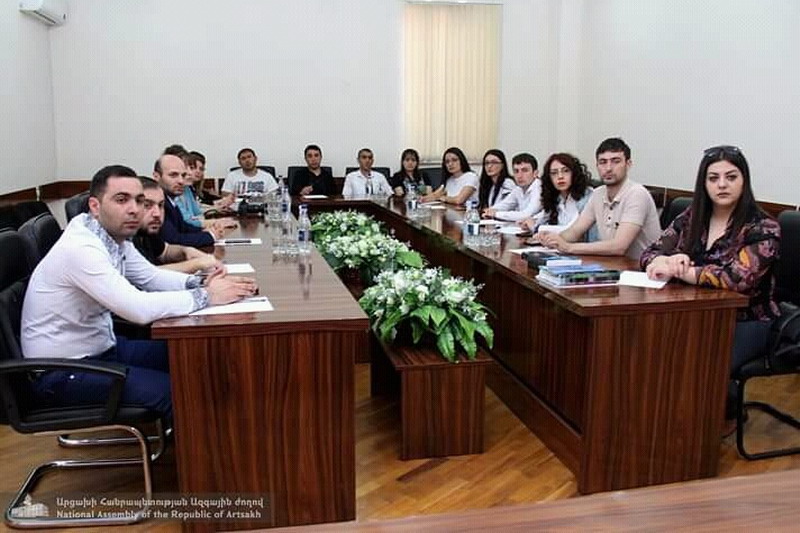
On the second day, we visited the Artsakh Parliament, where we met Vice Speaker Vahram Balayan. Discussions covered issues in the education system, the need to optimize universities, improve quality of education, and develop demand for highly qualified specialists.
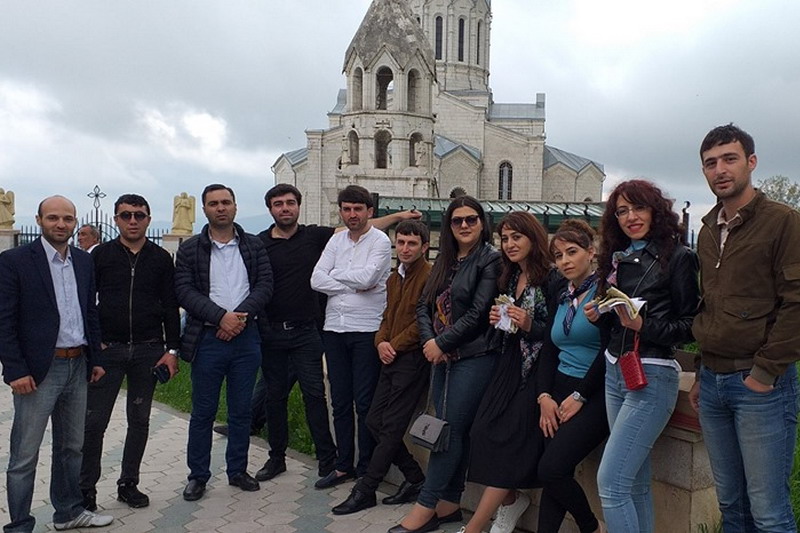
After a two-hour meeting, we traveled to Shushi. Due to its naturally inaccessible location, Shushi historically served as a fortress for Armenian residents of Varanda in Greater Armenia’s Artsakh province, later becoming a walled castle known as Shushi Fortress. Much of the fortress walls still stand. Shushi is also home to the Ghazanchetsots Holy Savior Cathedral (built 1868–1887), one of the largest Armenian churches, with a bell tower housing the residence of the head of the Artsakh diocese.
Inspired by what we saw, we continued to historical Tigranakert (1st century BC, founded by King Tigran the Great). Excavations began in 2006, revealing the city center, fortifications, main square, and early medieval basilica. A unique feature of the walls is the “dovetail” joints of the stones. During the 2008 excavations, a significant inscription was discovered on an antique 600-liter jar with a snake engraving, displayed in the Tigranakert Museum along with various artifacts from different periods, including a 5th–6th century clay disc (~8 cm in diameter) with a cross engraved within a frame on one side, and a male portrait with an Armenian inscription on the other — one of the oldest inscriptions found in Artsakh.
After visiting Tigranakert, our tour of historical Artsakh concluded, and we returned to Yerevan.